

Chiropractor or Physiotherapist: Who Should You See for Back or Neck Pain?
If your back or neck hurts, should you see a chiropractor or a physiotherapist?
For many common musculoskeletal problems, either profession can be a reasonable place to start. Both chiropractors and physiotherapists in Ontario are regulated healthcare professionals who assess pain and movement problems, develop a clinical diagnosis within their scope of practice and provide treatment and rehabilitation. There is considerable overlap between the two professions. The better choice often depends less on the name of the profession and more on your symptoms, goals, treatment preferences and the individual practitioner’s approach.
At The LiveWell Centre in Kingston, our chiropractors, Dr. Peter Pain and Dr. Laura Gifford, work collaboratively with physiotherapists Jennifer Kates and Dakshan Krishnapalan, (known as DK). When appropriate and with the patient’s involvement, they can coordinate care so that each provider has a clear role in helping the patient return to comfortable, confident movement.

What does a chiropractor do for back or neck pain?
Chiropractors focus on conditions involving the spine, joints, muscles and nervous system. A chiropractic appointment for back or neck pain begins with a health history and physical assessment before proceeding to an adjustment. We want to make sure that the chiropractic adjustment is the most effective and appropriate treatment for your condition. The goal is to treat the pain, as well as the cause of the condition in the first place.
Depending on the findings and the patient’s preferences, chiropractic care may include:
- Spinal or joint manipulation, commonly called an adjustment
- Joint mobilization using slower, lower-force movements
- Soft-tissue treatment
- Advice about activity, posture and work demands
- Mobility, strengthening or stabilization exercises, customized for the patient
- Strategies to help the patient remain active and manage recurrences
Not every chiropractic patient needs or wants an adjustment. Dr. Pain or Dr. Gifford will explain the available options, expected benefits, material risks and alternatives so the patient can make an informed choice. Lifestyle and daily habits, such as lifting techniques and sleeping positions, are always discussed to help our patients stay well once they are fixed.
What does a physiotherapist do for back or neck pain?
Physiotherapists assess how pain, injury and physical dysfunction affect movement and daily function. Jennifer and DK look at factors such as mobility, strength, coordination, load tolerance and the activities a patient wants or needs to perform.
Physiotherapy for back or neck pain may include:
- Progressive mobility and strengthening exercises
- Movement retraining and graded return to activity
- Manual therapy or joint mobilization
- Education about pain, recovery and activity modification
- Advice about work, sport or daily physical demands
- A home program that changes as the patient improves
- Selected treatment tools when clinically appropriate
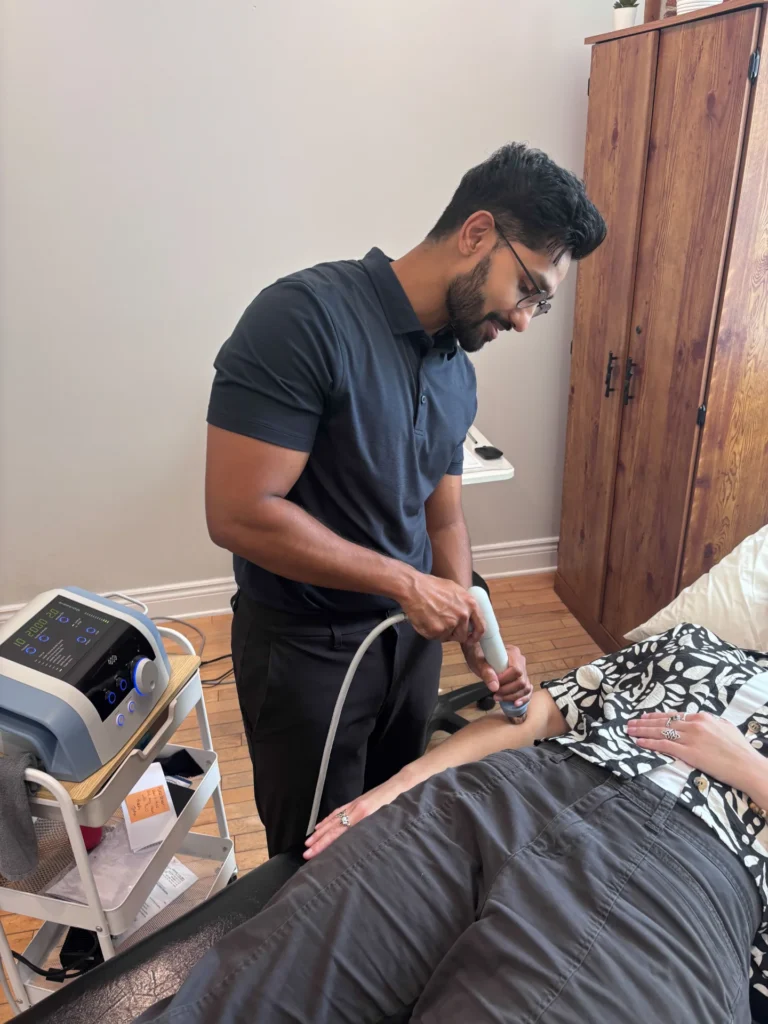
At The LiveWell Centre, Jennifer and DK may also use dry needling or shockwave therapy for selected conditions. These treatments are not automatically part of care and do not replace an individualized assessment or active rehabilitation plan.
What is the main difference between a chiropractor and a physiotherapist?
The simplest answer is that chiropractors often place greater emphasis on the spine, joints and hands-on treatment, while physiotherapists often place greater emphasis on movement, exercise and functional rehabilitation.
That distinction is helpful, but it is not absolute. Many chiropractors prescribe exercise and provide rehabilitation. Many physiotherapists use manual therapy and joint techniques. Training, experience and treatment style vary among individual practitioners.
Another key distinction is that chiropractors have the ability and responsibility to order and read X-rays if needed. The LiveWell Centre chiropractors usually send to Kingston Imaging Services for quick and easy service for the X-rays, if required.
The important thing is that both the chiropractors and physiotherapists at The LiveWell Centre will work and do what is best for the patients condition, creating a treatment plan that restores their health quickly and effectively.
There is no other clinic that has that capacity in Kingston.
The LiveWell Centre is the only clinic in Kingston that has both physiotherapists and chiropractors working side by side, collaboratively, in the best interests of the patient.
Question: Chiropractic care. Versus Physiotherapy
| Chiropractic | Physiotherapy | |
| Primary Clinical Emphasis | Spine, joints and related neuromusculoskeletal problems | Movement, physical function and rehabilitation |
| Assessment | Health history, orthopaedic and neurological examination, spinal and joint assessment | Health history, movement and functional assessment, strength, mobility and neurological testing |
| Common treatment tools | Adjustments, mobilization, soft-tissue care, education and exercise | Exercise therapy, movement retraining, manual therapy, education and selected modalities |
| Common patient goal | Reduce symptoms and restore comfortable joint and spinal function | Restore mobility, strength, capacity and confidence in activity |
| Does everyone receive the same treatment? | No—care should be individualized | No—care should be individualized |
When might you start with a chiropractor?
A chiropractic assessment may be a comfortable starting point if:
- Your main complaint is back or neck pain, headaches from neck dysfunction, stiffness or restricted spinal movement
- You prefer a hands-on approach combined with advice and exercise
- You have responded well to chiropractic care previously
- You want to understand whether spinal or joint treatment may be appropriate
- You want an assessment from a practitioner whose regulated scope focuses specifically on the spine and joints
This does not mean that chiropractic treatment will automatically involve an adjustment or that it is appropriate for every cause of back or neck pain.

When might you start with a physiotherapist?
A physiotherapy assessment may be a comfortable starting point if:
- Your main concern is weakness, reduced mobility or difficulty performing a specific activity
- You are returning to work from an injury
- You are recovering after surgery or a period of reduced activity
- You want a structured, progressive exercise and rehabilitation program
- You have a recurring problem that may benefit from gradually rebuilding physical capacity
Again, these are general examples rather than fixed rules. Physiotherapists also treat acute pain, and chiropractors also provide exercise-based rehabilitation.
Both our chiropractors and physiotherapists are excellent at treating and caring for sports related injuries, or helping with a return to training and sport. Many athletes from Queen’s University, RMC, and St Lawrence College trust our clinicians, along with many fitness enthusiasts local elite sports athletes.
What if you are still unsure whom to book with?
You do not need to diagnose yourself before calling the clinic. Explain where you hurt, how the problem started, whether symptoms travel into an arm or leg, and what activities you are having trouble doing. Our administrative team can help identify an appropriate first appointment without promising a particular diagnosis or treatment.
The first practitioner who assesses you can also recommend a different or additional provider if the findings suggest that another approach would be more suitable.

How do LiveWell’s chiropractors and physiotherapists work together?
Collaboration does not mean that every patient needs appointments with both professions. It means that Dr. Peter Pain, Dr. Laura Gifford, Jennifer Kates and Dakshan Krishnapalan can communicate—with the patient’s consent—when another perspective or treatment approach could add value.
For example:
A patient receiving chiropractic care may be referred to Jennifer or DK for more detailed exercise progression, strength development or return-to-sport planning.
A physiotherapy patient may be referred to Dr. Pain or Dr. Gifford when a focused spinal or joint assessment and chiropractic treatment may be helpful.
A patient with persistent or changing symptoms may benefit from reassessment and a coordinated plan rather than simply continuing the same treatment.
If the examination raises concern about a problem outside our scope, the appropriate next step may be referral to a family doctor, emergency department or another healthcare professional—not more treatment at the clinic.
When two LiveWell practitioners are involved, the goal is not to duplicate services. It is to make their roles clear and keep the plan centered on the patient’s goals and progress. Many of the patients seen here in Kingston will often double up on the treatments, having a physiotherapists treat one condition, and the chiropractor address another, each in their particular area of expertise.
What treatments are recommended for back and neck pain?
There is no single treatment that is best for every person. Current clinical guidelines commonly support staying active, receiving clear education and using exercise or other non-surgical care selected for the individual. Manual therapy, including mobilization or spinal manipulation, may be one part of care for some patients rather than the entire plan.
At The LiveWell Centre , treatment decisions are based on the assessment, the patient’s preferences and the best available evidence—not on a predetermined number of visits or a one-size-fits-all program.
Progress should be reviewed using changes that matter to the patient: sleeping more comfortably, turning the head while driving, sitting through class, lifting at work, returning to the gym or completing a run.
Will I need X-rays or other imaging?
Most people with uncomplicated back or neck pain do not automatically need imaging before beginning conservative care. Imaging may be appropriate when the history or examination raises concern about trauma, significant neurological findings, underlying disease or another issue that could change management.
Dr Pain or Dr Gifford can order an X-ray if needed, as well as refer out if more enhanced imaging, such as a CT scan or MRI are warranted.
When should back or neck pain receive urgent medical attention?
Back and neck pain are common, but a small number of cases require urgent medical assessment. Seek prompt or emergency care for symptoms such as:
- New loss of bladder or bowel control
- New numbness around the groin, genitals or inner thighs
- Severe or rapidly worsening weakness in an arm or leg
- Major trauma, especially with severe pain or inability to move normally
- Fever or feeling seriously unwell along with spinal pain
- Chest pain, severe shortness of breath, fainting or other symptoms suggesting the pain may not be musculoskeletal
- A sudden, severe and unusual headache or new difficulty speaking, swallowing, walking or seeing
This list is not complete. If you are worried that your symptoms may be an emergency, seek urgent medical care rather than waiting for a clinic appointment.
Can you see both a chiropractor and a physiotherapist?
Yes! In fact, it is probably wise to run away from any practitioner who says that a patient can see them only, and not be co-treated by anyone else! When there is a clear reason and the care is coordinated, patients may start with one provider and involve another as their needs change.
Seeing more practitioners is not automatically better. The important questions are whether each treatment has a purpose, whether everyone understands the plan and whether the patient is making meaningful progress.
Chiropractor or physiotherapist: what is the best first step?
For most uncomplicated back or neck pain, either a chiropractor or physiotherapist can provide an initial musculoskeletal assessment. Choose the practitioner whose approach best matches your immediate needs, or contact the clinic if you would like help deciding.
At The LiveWell Centre in Kingston, the advantage is not having to choose between two competing philosophies. Dr. Peter Pain, Dr. Laura Gifford, Jennifer Kates and Dakshan Krishnapalan bring complementary perspectives and can help direct care according to the individual patient—not according to a cookie-cutter formula.
To discuss whether chiropractic care or physiotherapy may be an appropriate starting point for your back or neck pain, contact The LiveWell Centre or book an assessment with our team.
Frequently asked questions
Do I need a doctor’s referral?
Patients can contact a chiropractor or physiotherapist directly in Ontario. However, although it is rare, an extended health plan may require a medical referral for reimbursement for physiotherapy so check the terms of your individual policy.

Is a chiropractic adjustment always necessary for back pain?
Not always, but it is often the first best choice, depending on the condition. Treatment should follow the assessment and reflect the patient’s needs and preferences. Occasionally, if there is severe pain and muscle guarding, other approaches are used. Chiropractic care can include mobilization, soft-tissue treatment, exercise, education and activity advice as well as adjustment.
Does physiotherapy involve only exercise?
No. Exercise is often important, but physiotherapists may also use education, manual therapy, movement retraining and selected treatment tools. The specific plan depends on the assessment.
Which profession is better for sciatica?
Sciatica-like symptoms can have different causes. Either profession can be an appropriate first contact for assessment, but symptoms such as progressive weakness or new bladder, bowel or saddle-sensation changes require urgent medical attention.
Will my chiropractor and physiotherapist share information?
When collaboration would help, the providers can communicate relevant clinical information with the patient’s knowledge and consent and in keeping with privacy requirements.
Medical note:
This article provides general information and is not a diagnosis or a substitute for individual medical advice.
Treatment suitability and results vary.
Sources for clinical review
College of Chiropractors of Ontario: Who are chiropractors?
College of Physiotherapists of Ontario: Physiotherapy scope of practice
PubMed: Interventions for the management of acute and chronic low back pain—clinical practice guideline
PubMed: Exercise therapy for chronic low back pain—systematic review
Choosing Wisely Canada: Physical Medicine and Rehabilitation recommendations Image and publishing recommendations